The core mission of the Spirit of Harmony Foundation is advocating for instrument-based music education for children. A majority of this website and our Music Education Advocacy Toolkit discusses the most compelling research in the fields of neurobiology and youth development, and we endorse the following Best Practices:
- Instrument-based music education for children,
- Beginning at as young an age as possible,
- Ideally for a minimum 4 hours per week,
- For a minimum of 2 years.
Benefits of Instrument-Based Music Education for Children:
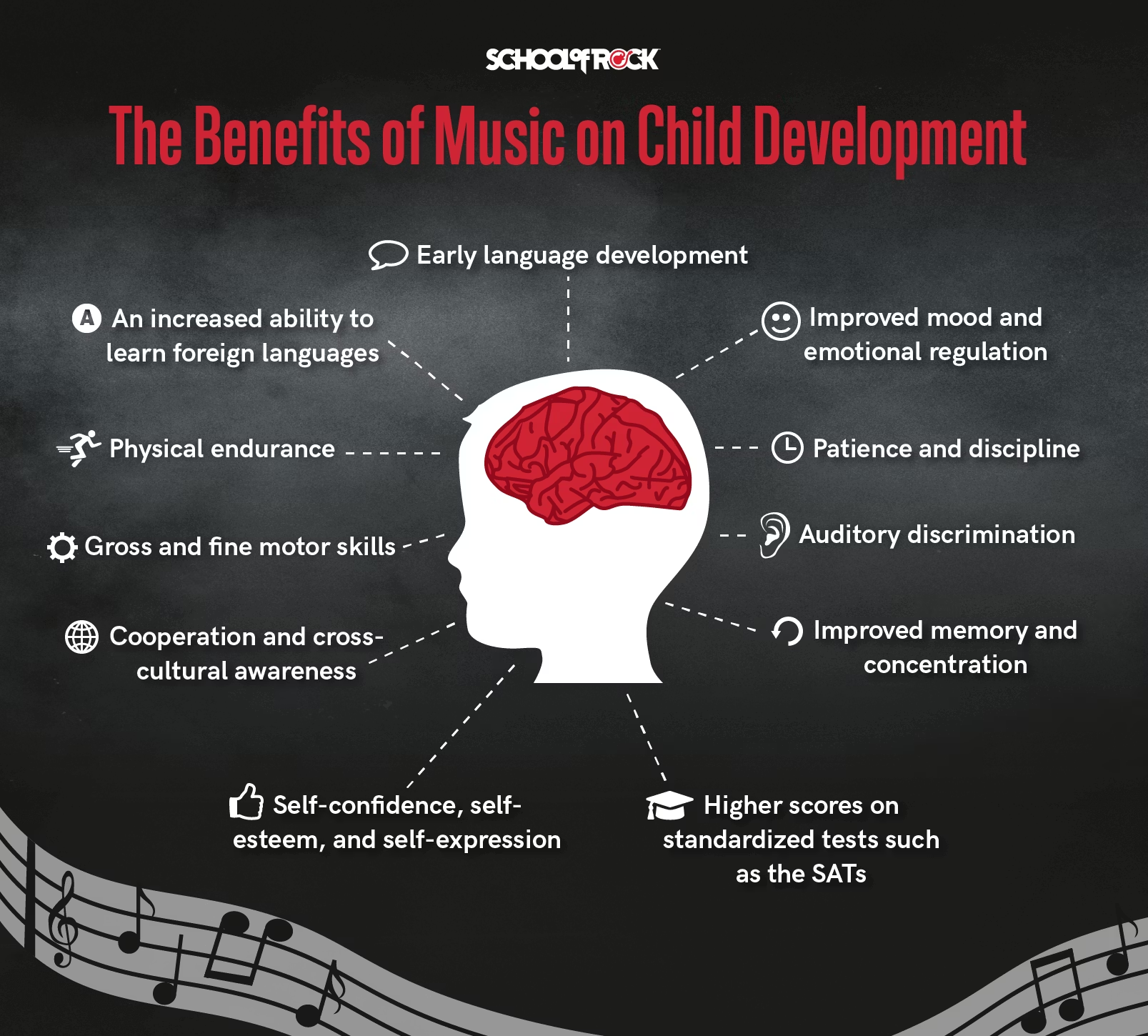
- Cognitive and Brain Development: Playing an instrument engages multiple areas of the brain simultaneously, strengthening the corpus callosum (connecting the two hemispheres) and increasing gray matter. It significantly improves executive function, including planning, memory, and attention.
- Academic Achievement: Studies show that children who study music have better literacy, reading comprehension, and math skills. It can lead to higher test scores, with one study showing music students are up to 24% more likely to graduate and one year ahead of their peers.
- Motor Skills and Coordination: It enhances hand-eye coordination and fine motor skills (finger dexterity) through the precise physical movements required, such as playing strings or keys.
- Social and Emotional Growth: Playing in ensembles or groups fosters teamwork, cooperation, and empathy. It serves as a creative outlet for emotional expression, reducing stress, anxiety, and improving self-esteem.
- Long-Term Discipline: Mastering an instrument requires patience, perseverance, and consistent practice, which instills a strong work ethic.
Active Participation Matters: Neuroscience indicates that playing an instrument provides more significant benefits than passive listening, as it requires active engagement to strengthen neural connections. Music listening and appreciation programs are valuable, but the Spirit of Harmony focuses on active music-making.
The Wide Variety of Instrument-Based Music Education Programs allows for a wide range of age groups, program budgets, and skill levels, focusing on performance, composition, and skill development:
- traditional school ensembles (orchestras, concert bands, marching bands)
- private instruction (piano, guitar, strings, woodwinds, brass)
- specialized ensembles (rock bands, jazz groups, musical theater)
- culturally unique groups (mariachi, drumlines and drum circles, ukulele, polka bands, bagpipes, bells, percussion, etc.)
- technology-driven approaches (Modern Band, Ableton Live, Logic Pro, etc.)
- specialized programs like Suzuki or Orff-Schulwerk
Resources are presented throughout this website, but here are some additional resources: